
Long-term care decisions involve much more than choosing where someone will live. Health needs, financial resources, legal documents, insurance, taxes, and family preferences may all affect the available options. Building the right professional team before a crisis can help families make more informed and confident decisions.
Planning for Long-Term Care
Planning for long-term care often begins with one difficult conversation—but taking action early can make a
significant difference. Whether you are planning for yourself, a spouse, or an aging parent, understanding
your financial resources and building the right team of professionals can help you make informed decisions
before a crisis occurs.
Long-term care can include assisted living, memory care, adult care homes, skilled nursing, in-home care,
or other services. The right choice depends not only on health and care needs, but also on finances, family
circumstances, preferences, and available resources.
A Client Story: When Care Costs Begin to Change the Financial Picture
Recently, I worked with a family who was trying to plan for the long-term care needs of their mother. Her
monthly income and resources had covered her expenses for some time, but the cost of housing and care
had become a much larger part of her overall financial picture.
The family had questions about how long her resources would last, whether she might eventually qualify
for Medicaid, and whether there were other financial or tax considerations they should understand. They
also wondered whether there might be tax advantages related to supporting their mother financially.
As a senior living advisor, my role was not to provide tax or legal advice. Instead, I helped the family
understand the questions they needed to ask and connected them with the appropriate professionals who
could evaluate their individual circumstances.
This is one of the most rewarding parts of my work. I am able to guide families through a confusing and
emotional process, help them identify the right questions, and connect them with resources and
professionals who can help them make informed decisions.

INTEGRITY INSIGHT
Long-term care planning is not simply about finding a place to live. It is about understanding how
care needs, housing, health, finances, taxes, legal documents, and family support all fit together.
The earlier families begin asking questions, the more choices they may have.
Building Your Long-Term Care Planning Team
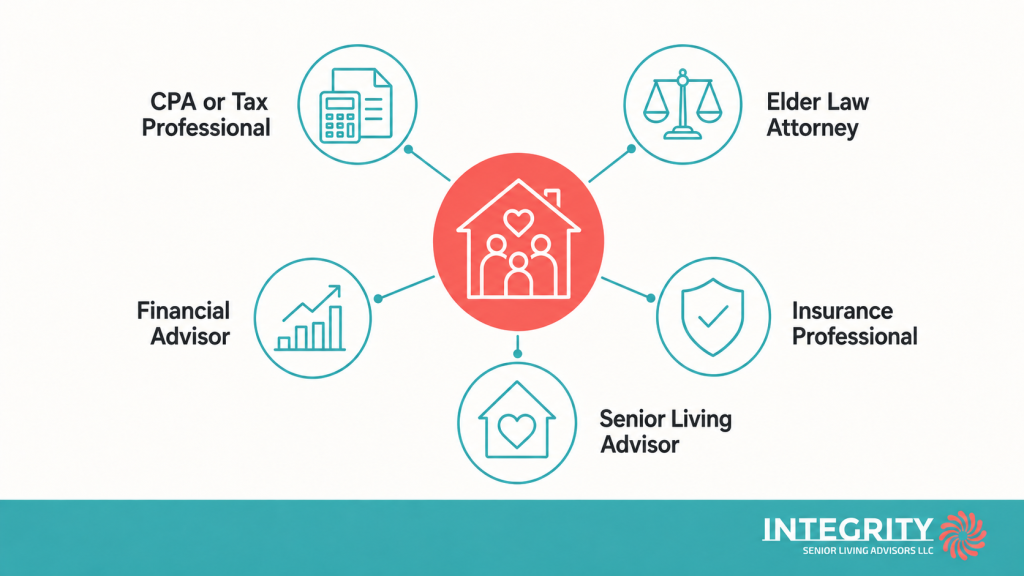
No single professional can answer every question involved in long-term care planning. A strong team may
include several professionals who each bring a different area of expertise.
CPA or Tax Professional
A CPA or qualified tax professional can help families understand tax questions related to caregiving,
retirement income, medical expenses, and supporting an aging parent. They can also explain whether
certain expenses or family arrangements may have tax implications.
Elder Law Attorney
An elder law attorney can help with legal planning for aging, including powers of attorney, estate planning,
Medicaid planning, and other issues that may arise as care needs change. They can help families
understand legal options and make sure important documents are in place.
Financial Advisor
A financial advisor can help families look at income, savings, investments, retirement assets, and the potential cost of future care. They can help evaluate how long resources may last and how long-term care expenses may affect an overall financial plan.
Insurance Professional
An insurance professional can review existing policies and explain whether long-term care insurance, life insurance, Medicare-related coverage, or other insurance products may play a role in the family’s plan.
Senior Living Advisor
A senior living advisor helps families understand their care and housing options. This may include researching assisted living, memory care, adult care homes, in-home care, skilled nursing, or other services based on the individual’s needs, preferences, and budget.
A senior living advisor can also help families compare communities, understand differences in levels of care, identify availability, arrange tours, and navigate the process of choosing a setting that may be a good fit.
Understanding Medicaid and Long-Term Care
For many families, Medicaid eventually becomes an important part of long-term care planning. Eligibility rules are complex and can vary based on income, assets, marital status, medical needs, and other factors.
Families should be cautious about making financial decisions based on assumptions or general information found online. An elder law attorney or qualified Medicaid planning professional can help explain the rules that apply to an individual’s situation.
Planning ahead can be especially important because financial decisions made without proper guidance may affect future eligibility or create unintended consequences.
When Should You Start Planning?
The best time to begin long-term care planning is usually before an immediate crisis. You do not need to know exactly what type of care you will need in the future to begin the conversation.
- Talk with your family about your preferences for future care.
- Review your income, savings, insurance, and other financial resources.
- Make sure important legal documents are current.
- Understand what Medicare, Medicaid, and private insurance may—and may not—cover.
- Learn about senior living and care options in your area before you need them.
- Build relationships with trusted professionals who can help as circumstances change.
How Integrity Senior Living Advisors Helps
At Integrity Senior Living Advisors, our goal is to make the process of exploring senior living and care options less overwhelming for older adults and their families.
Our services are provided at no cost to families. We are compensated through referral fees paid by participating senior living communities and care providers when a client chooses to move forward with one of those providers.
Nearly all senior housing providers that a client may wish to consider are contracted with the agency. The agency carefully evaluates senior living providers and does not present options that do not meet its minimum standards for quality, licensing, or suitability.
A small number of senior living providers choose not to contract with the agency. These providers may include long-established communities with limited availability or communities that maintain lengthy waiting lists. When appropriate, the agency may inform clients about these providers as potential options, even though the agency does not receive a referral fee from them.
The agency generally does not contract with providers that primarily specialize in services for young adults with developmental disabilities or young adults with mental health needs.
We believe families deserve to understand how our services work and how we are compensated. Our role is to help families identify options that may fit their needs and preferences while providing guidance and support throughout the search process.
Planning for Long-Term Care in Oregon and Washington
Families in Oregon and Washington have access to a wide range of senior living and care options, but navigating those choices can be challenging. Licensing, care levels, Medicaid programs, costs, and availability can differ from one community or state to another.
Whether you are considering assisted living, memory care, an adult care home, in-home care, or a higher level of care, it is important to look beyond the monthly price. Ask about what is included, how care needs are assessed, what happens if needs increase, and how the community handles changes in a resident’s financial situation.
Questions Families Should Ask Before Choosing Care
- What level of care does my loved one need today?
- Could their care needs change in the near future?
- What can our family realistically afford?
- How long might current financial resources last?
- What happens if the resident eventually needs Medicaid?
- Are there additional fees for increased care?
- What legal documents should be updated?
- Should we speak with a CPA or tax professional?
- Would an elder law attorney be appropriate?
- Are there insurance policies or benefits we should review?
- What senior living options are currently available?
Start the Conversation Before You Need the Answer
Long-term care planning can feel overwhelming, especially when families are already dealing with health concerns or a sudden change in circumstances. But you do not have to figure everything out at once.
Start by having the conversation. Gather the information you have. Identify the questions you cannot answer. Then bring in the right professionals to help fill in the gaps.
At Integrity Senior Living Advisors, we believe families should have access to information, guidance, and thoughtful options when making decisions about senior living and care. Our role is to help families navigate the process, understand their choices, and connect with resources that can help them move forward with greater confidence.
Need help exploring senior living or care options?
Contact Integrity Senior Living Advisors to learn how we can help you and your family navigate the next step.